Living with extensive tooth loss can affect what you eat, how you speak and how comfortable you feel smiling. Even patients who have already replaced their teeth with traditional dentures may struggle with movement, instability or simply feeling like their teeth aren’t truly their own.
Full-arch dental implants offer another option.
At Union Street Dentistry in Schenectady, full-arch implant treatment can be used to replace an entire upper or lower arch of missing or failing teeth with a restoration supported by dental implants.
For appropriate patients, treatment options may include All-on-4® dental implants and other implant-supported full-arch restorations.
The first step is determining what can be saved, what needs to be replaced and which approach makes the most sense for your mouth.
Full-arch dental implants are designed for patients who need to replace all or most of the teeth in the upper jaw, lower jaw or both.
Instead of replacing every missing tooth with an individual implant, a carefully planned number of dental implants can be positioned in the jaw to support an entire arch of replacement teeth.
The implants act as anchors for the restoration, providing support from the jaw rather than relying solely on the gums as a conventional denture does.
Full-arch implant treatment may be considered for patients who:
Every case is different. An examination and appropriate dental imaging are necessary to determine whether full-arch implant treatment is possible and what type of restoration may be appropriate.
All-on-4® is a full-arch dental implant treatment concept that uses four strategically positioned dental implants to support an entire arch of replacement teeth.
Rather than placing an implant beneath every missing tooth, four implants are positioned to create a foundation for the full-arch restoration.
The posterior implants may be angled to make effective use of available bone and provide support across the arch.
For appropriate candidates, this approach can allow an entire upper or lower set of teeth to be restored using relatively few implants.
While the name All-on-4® specifically refers to a four-implant approach, not every full-arch case is identical. The appropriate number, position and type of implants should be determined based on the patient’s anatomy, available bone and treatment needs.
Both traditional dentures and full-arch dental implants can replace an entire set of missing teeth, but they function very differently.
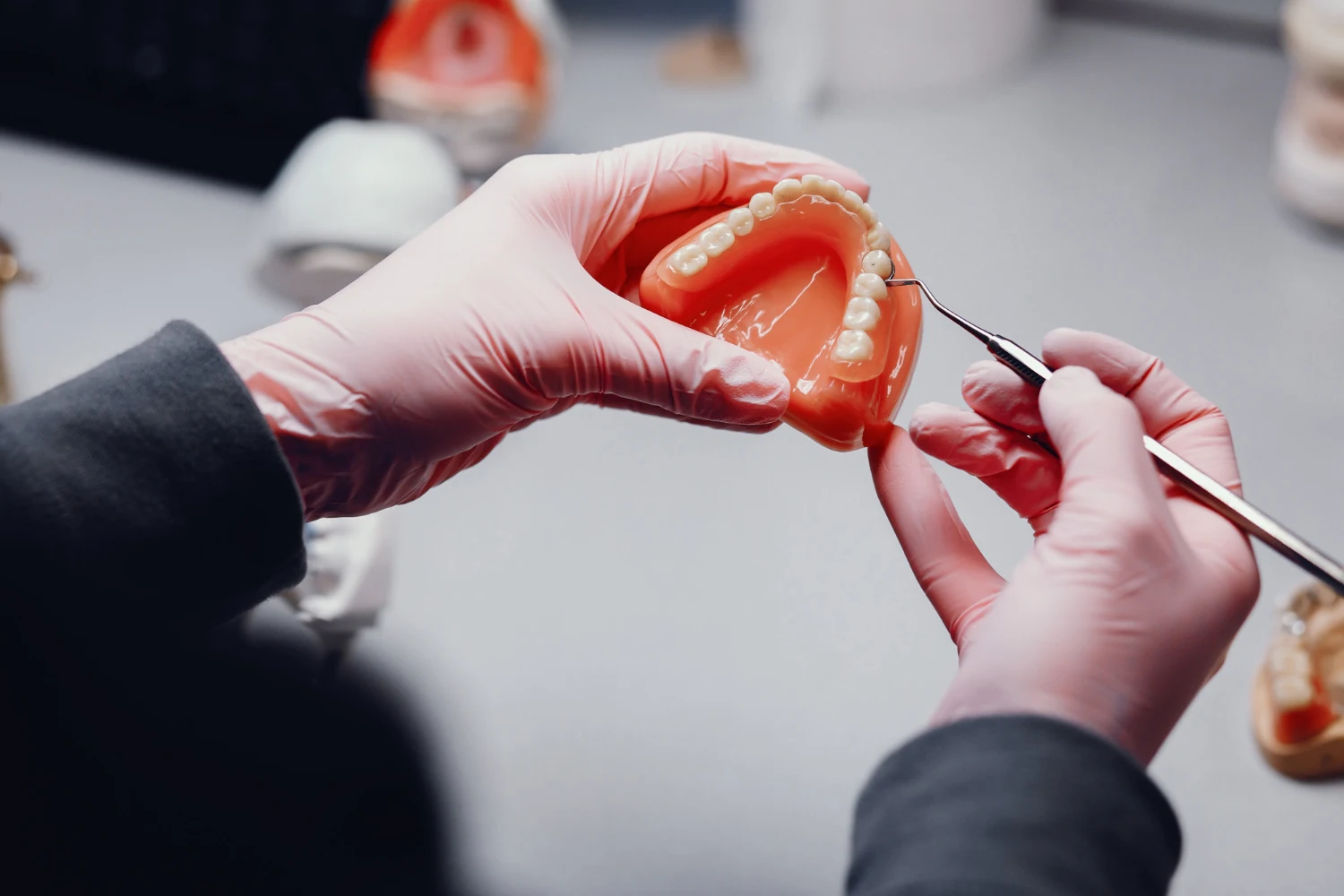
A conventional full denture rests primarily on the gums and underlying tissues.
For many patients, dentures provide an effective and affordable way to replace missing teeth. However, some people experience movement while eating or speaking, changes in fit over time or difficulty adapting to a removable appliance.
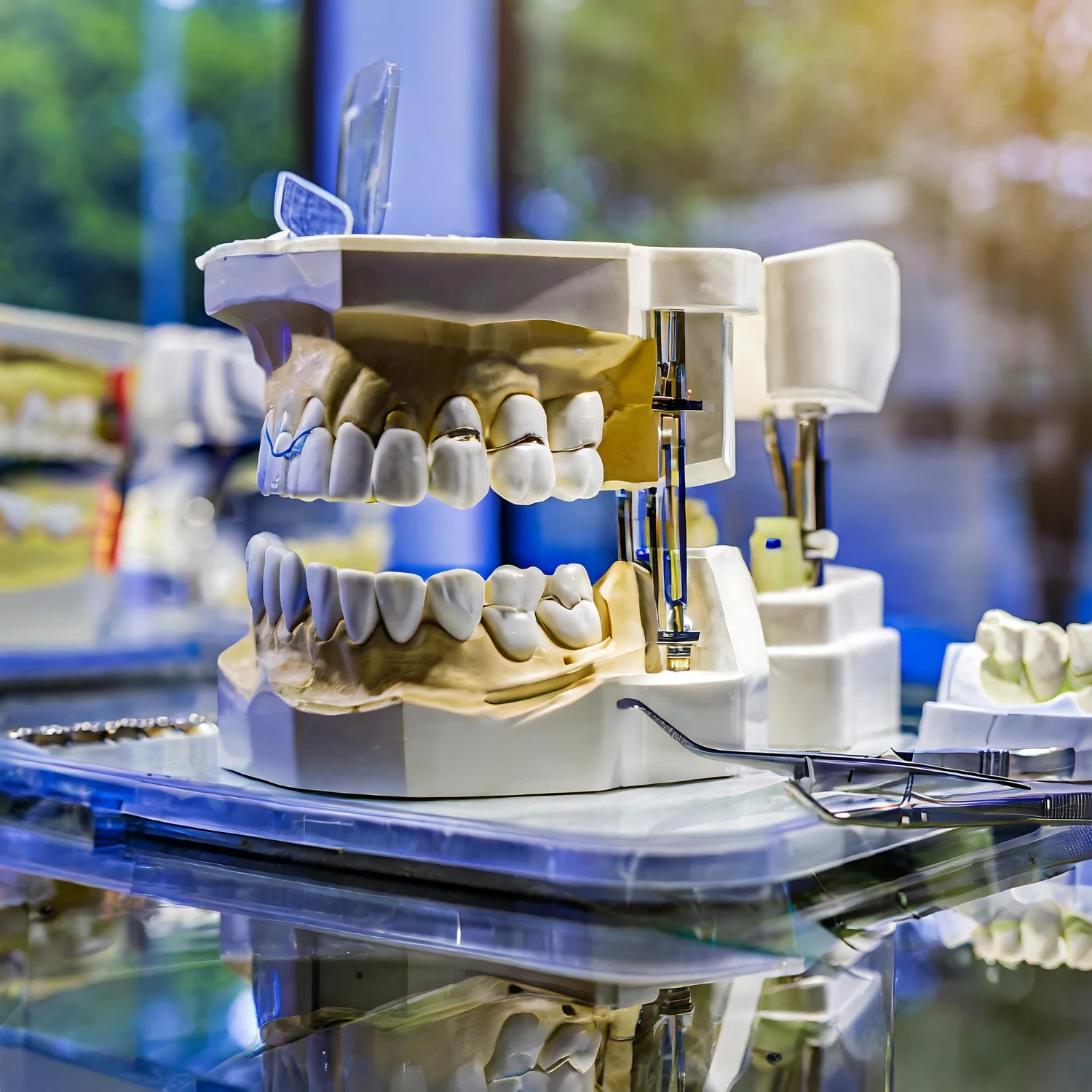
An implant-supported full-arch restoration receives its support from dental implants placed within the jawbone.
This provides greater stability and allows chewing forces to be transferred through the implants rather than relying solely on the gums.
Depending on the type of restoration, the final teeth may be fixed in place or designed to be removable by the patient.
Neither option is automatically right for everyone.
Your oral health, available bone, expectations, budget and desired level of stability all play a role in deciding which type of tooth replacement makes the most sense.
For the right patient, replacing an entire arch with an implant-supported restoration can provide significant functional and lifestyle benefits.
Dental implants create a strong foundation for the replacement teeth, reducing the movement commonly associated with traditional removable dentures.
A stable restoration can make it easier to bite and chew a wider variety of foods.
The full-arch restoration is designed to replace an entire row of teeth and create a smile that complements your facial appearance.
Fixed full-arch restorations do not depend on denture adhesives to remain in place.
Dental implants transfer forces into the jawbone, functioning differently from a prosthesis that simply rests on the gums.
For patients with widespread dental problems, full-arch treatment can provide a comprehensive solution rather than treating failing teeth individually over and over again.
You do not have to be completely without teeth to consider full-arch dental implant treatment.
Some patients seeking this type of treatment still have many of their natural teeth. The issue is whether those teeth are healthy enough to provide predictable long-term function.
Teeth affected by extensive decay, advanced periodontal problems, fractures, severe wear or repeated dental work may eventually reach a point where continuing to repair each tooth individually is no longer the most predictable approach.
That does not mean every compromised tooth needs to be removed.
Before recommending full-arch treatment, the existing teeth should be evaluated carefully to determine which teeth can reasonably be preserved and whether rebuilding the existing dentition or replacing an entire arch offers the better long-term approach.
Full-arch dental implants can be an option for many patients with significant tooth loss, but candidacy depends on more than the number of missing teeth.
We need to consider factors including:
Some patients who have experienced bone loss may still have implant treatment options.
The purpose of the consultation is to determine what is possible in your specific situation, rather than assuming that one treatment works for everyone.
The exact process depends on the condition of your existing teeth, available bone and the type of restoration being planned.
We begin by evaluating your teeth, gums, bite and jaw. If you still have natural teeth, we'll determine their condition and whether preserving them remains a reasonable option. Dental imaging is also an important part of planning implant position and evaluating available bone.
Once we understand the condition of your mouth, we can determine the appropriate approach for replacing the arch. Planning may include:
We’ll explain the sequence before treatment begins so you understand what to expect.
The dental implants are surgically positioned within the jaw according to the treatment plan. In an All-on-4® approach, four implants are used to support the arch. Other full-arch situations may require a different number or configuration of implants.
The implants need time to integrate with the surrounding bone and develop a stable foundation. Healing varies from patient to patient and depends on the extent of treatment performed.
Once the implants are ready, the definitive full-arch restoration can be completed. The goal is to create a restoration that provides appropriate function, stability, bite and appearance for your individual situation.
This is one of the most common questions surrounding All-on-4® and full-arch treatment.
In certain cases, a temporary set of teeth may be attached to the implants soon after placement. This is often what people mean when they hear terms such as “same-day teeth” or “teeth in a day.”
However, immediate placement of a temporary restoration is not appropriate for every patient.
It depends on factors such as implant stability, available bone, the extent of surgery and the overall treatment plan.
Even when temporary teeth can be placed immediately, they are not necessarily the final restoration. The implants still require healing before the definitive teeth are completed.
We’ll explain whether an immediate temporary restoration is an option after evaluating your specific case.
Bone loss is common in patients who have been missing teeth for a long time, and it does not automatically mean dental implants are impossible.
One reason the All-on-4® concept was developed was to make strategic use of available bone by changing the position and angle of the implants.
However, every patient’s anatomy is different.
Some individuals may be able to receive implants without extensive grafting, while others may require bone grafting or a different treatment approach.
Dental imaging allows us to evaluate the quantity and location of available bone before determining which option is appropriate.
They can be designed in different ways.
Some implant-supported full-arch restorations are fixed, meaning they remain attached to the implants and are not removed by the patient during normal daily use.
Other implant-supported options are removable and attach securely to implants for additional stability compared with a conventional denture.
That distinction is important because patients often use terms such as “implant dentures,” “permanent dentures,” “All-on-4” and “full-mouth implants” interchangeably even though they can refer to different treatments.
We’ll explain the differences and help you understand exactly what type of restoration you’re considering.
Full-arch implant teeth still require daily care.
Although the replacement teeth themselves cannot develop cavities like natural teeth, plaque and bacteria can accumulate around the implants and beneath the restoration.
Cleaning may involve a combination of:
We’ll show you how to clean around your particular restoration.
Protecting the gum and bone surrounding the implants is essential to their long-term health.
The major difference is how the final replacement teeth are designed and retained.
An implant-supported removable denture attaches to dental implants for additional stability but can still be removed by the patient for cleaning.
A fixed full-arch implant restoration remains attached to the implants and is generally removed only when professionally necessary.
Both approaches use dental implants for support.
For some patients, a removable implant-supported denture provides the right combination of stability, maintenance and cost. Others specifically want a fixed solution.
Dental implants are intended to provide long-term support, but no dental treatment should be described as guaranteed for life.
Long-term success depends on several factors, including:
It’s also useful to distinguish between the dental implants themselves and the prosthetic teeth attached to them. The restoration experiences everyday wear and may require maintenance, repair or replacement over time even when the implants remain healthy.
Full-arch implant treatment is highly customized, so there isn’t one price that applies to every patient.
Cost depends on factors such as:
The most useful way to understand cost is to first determine exactly what treatment you need.
After your evaluation, we’ll explain the recommended treatment plan and associated costs so you can compare your options.
Rebuilding an entire arch of teeth requires more than simply placing implants.
The health of the gums and bone, position of the implants, bite, appearance of the smile and design of the final restoration all need to work together.
Dr. Mohammed Forhad has completed advanced training in dental implants and is a member of the International Dental Implant Association.
At Union Street Dentistry, we’ll evaluate the entire situation and help you understand whether preserving your existing teeth, implant-supported dentures, All-on-4® or another full-arch approach is appropriate.
Yes. Strategically positioned dental implants can support an entire upper or lower arch of replacement teeth. The number of implants and type of restoration depend on your anatomy and treatment needs.
The All-on-4® treatment concept uses four implants to support a complete arch of replacement teeth. However, not every patient or full-arch restoration should necessarily be treated with exactly four implants.
No. Some patients still have natural teeth but are considering full-arch treatment because those teeth have extensive damage or a poor long-term prognosis. Existing teeth should be evaluated before deciding whether removal is appropriate.
All-on-4® is commonly used to support a fixed restoration that the patient does not remove for normal daily cleaning. However, dental restorations require ongoing maintenance and should not be interpreted as guaranteed to last forever.
One of the major goals of implant-supported treatment is to restore chewing function. There may be temporary dietary restrictions during healing, and the level of function after treatment varies by patient and restoration.
Potentially. Patients who currently wear traditional dentures may be candidates for implant-supported dentures or fixed full-arch implant treatment depending on their oral health and available bone.
Bone loss does not automatically eliminate dental implants as an option. Implant position, available bone, grafting and alternative treatment approaches can all affect candidacy. A new evaluation is necessary to determine what is possible.
No. Traditional dentures rest primarily on the gums. Full-arch implant restorations receive support from dental implants placed within the jaw. Implant-supported dentures represent another option that combines implants with a removable prosthesis.
That depends on how many teeth are missing, the condition of your remaining teeth, bone support and your overall treatment goals. If most of your natural teeth remain healthy and restorable, replacing individual missing teeth may make more sense. Full-arch treatment is generally considered when tooth loss or dental damage is much more extensive.
If you’re missing most or all of your teeth, struggling with dentures or facing extensive dental problems, you don’t have to figure out the solution on your own.
Start with an evaluation.
Union Street Dentistry can assess your existing teeth, bone and oral health and explain the differences between traditional dentures, implant-supported dentures, All-on-4® and other full-arch implant options.
Visit us at 1740 Union Street in Schenectady, NY to learn what may be possible for your smile.